
The difference, by mechanism
3D tour vs 360 tour: one you walk, one you jump between.
A 360 tour is a set of panoramic photographs taken from fixed points, and you jump from one to the next. A 3D tour is a reconstruction of the space itself, so you can move through it continuously — cross the room, stop halfway, turn around, go back. The difference is not resolution. It is whether the space between the camera positions exists at all. Walkd builds the second kind from one continuous video you shoot on your own phone.

The mechanism
What is the difference between a 3D tour and a 360 tour?
They are made in different ways, and everything else follows from that. One samples a space at a handful of points. In the other, the video becomes the space.
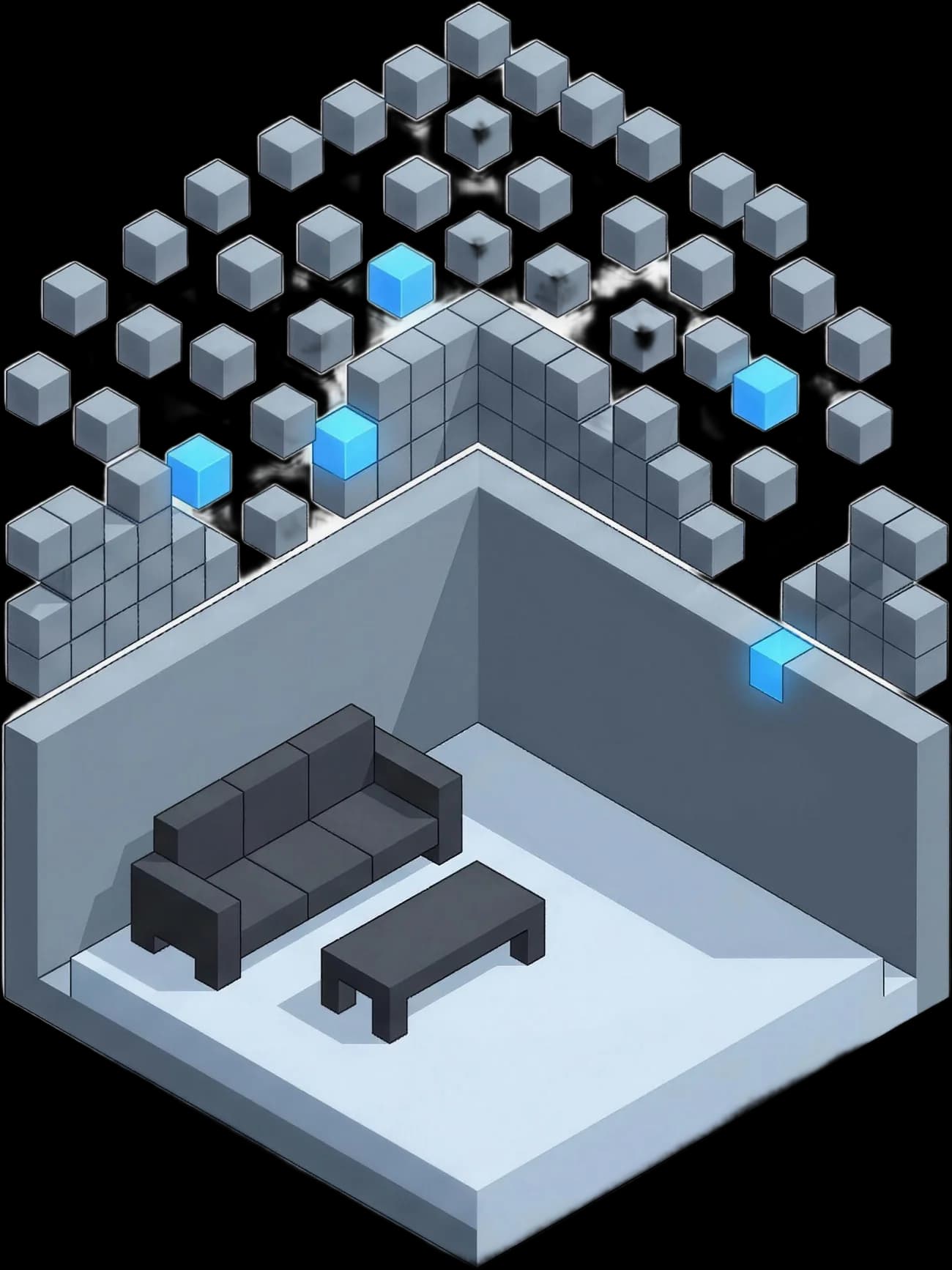
- A 360 tour is a set of photo bubbles.
- A camera that sees in every direction is set down in one spot and captures everything visible from that spot. Do that in eight places and you have eight bubbles, joined by hotspots you click to move between. Inside a bubble you can look anywhere you like. You cannot walk two steps to the left, because no photograph was taken two steps to the left.
- A 3D tour is one continuous space.
- Frames from a video are used to work out where the camera was in each of them, and from those positions, the shape of the room they were moving through. What comes out is a single reconstructed space rather than a set of viewpoints — so the space between the places the camera passed through exists too, and a viewer can move through it without a cut.

In the viewer
What can you actually do in each one?
In a 360 tour you can look, from the places the camera was set down. In a 3D tour you can look and you can move, along a path nobody picked for you in advance.
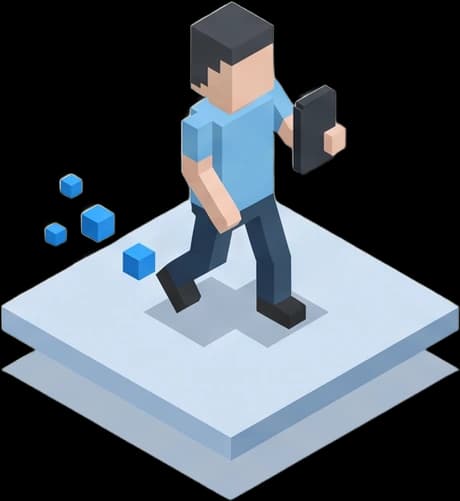
You walk, rather than jump.
Move in any direction, at your own pace, and stop between the points. In a 360 tour the moves available are the hops from one fixed viewpoint to the next.
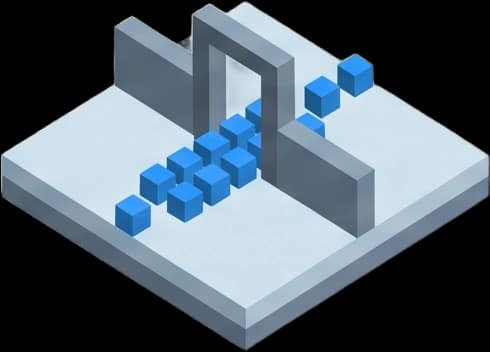
You go through the doorway.
Room to room is one continuous move, so how the spaces join is something you travel rather than a cut between two separate views of it.
It is one space, not eight views.
Where you can stand is limited by the walls rather than by where a tripod was put down — including spots nobody stopped at while recording.

What each one takes
What does it take to make each one?
- A 360 tour: a camera, a tripod, and a stop in every room.
- The format is built out of fixed viewpoints, so somebody carries the camera to each of those points, sets it down, steps out of shot and triggers it — then does it again in the next room. The number of stops is the number of viewpoints the finished tour will have.
- A 3D tour: the phone already in the room, and one slow lap.
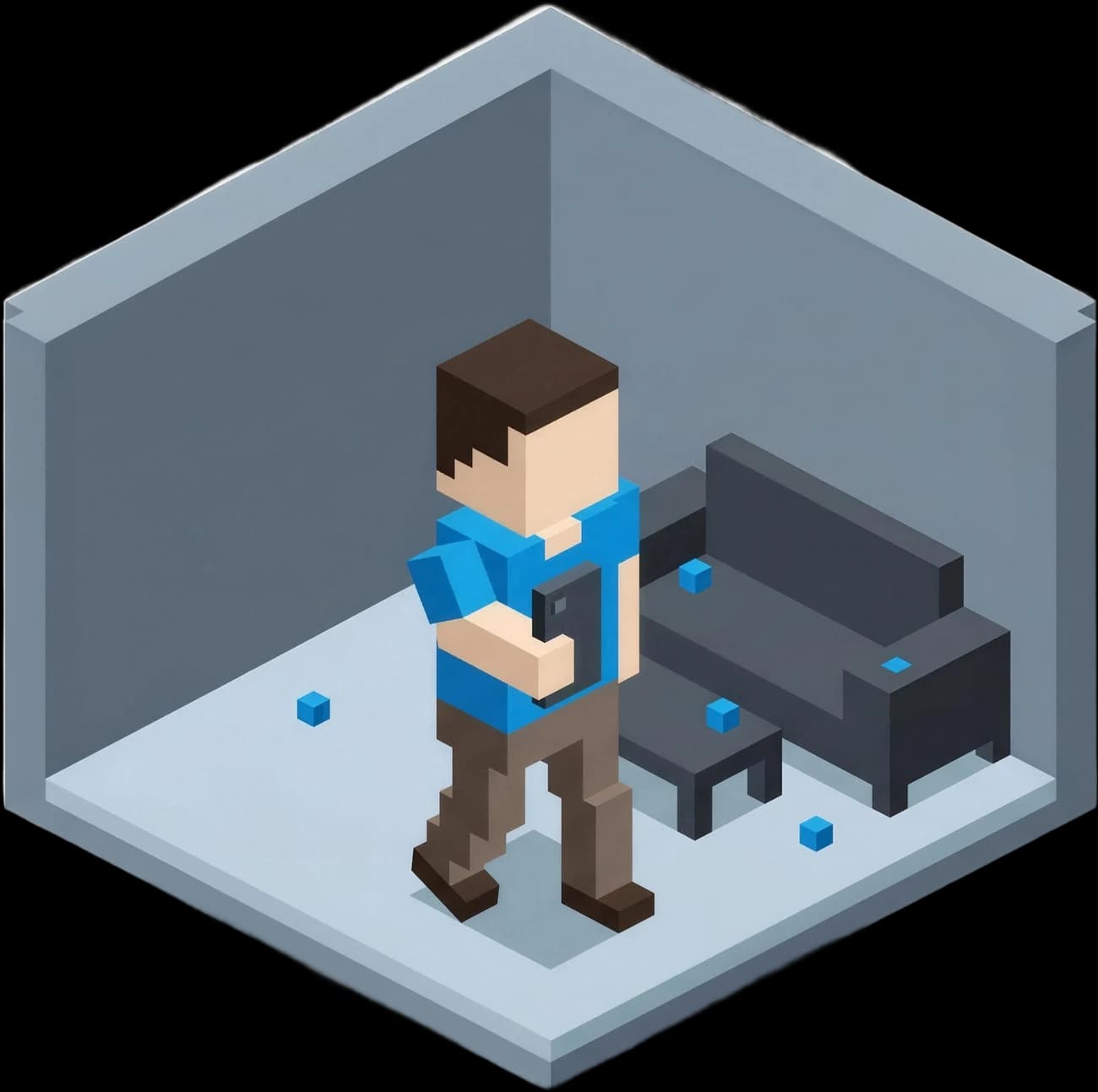
- You shoot it. Whoever is already standing in the space — the owner, the agent, the property manager — records one slow continuous video on the phone in their pocket, around ninety seconds for a typical home, and uploads it. There is no 360 camera to buy, no tripod, and no visit for anyone to schedule, because the person holding the phone is already there.

Where the other one wins
When is a 360 tour the better choice?
Often enough that the list is worth writing down. A comparison that finds nothing good to say about the alternative is an advertisement, and everybody reading one knows it.
When a photograph is the point.
A panorama is a photograph. At the spot it was taken from it carries whatever detail the camera captured, and a reconstruction is not going to beat a photograph on its own tripod. If the job is a sharp record of one viewpoint — a finish, a fixture, the condition of something — that is what a photograph is for.
When the space cannot be walked in one take.
The reconstruction is built from one continuous walk, so it needs a route through the space. A floor you cannot sweep uninterrupted, a room you are only allowed to stand in the doorway of, a building where half the doors are locked — fixed viewpoints cope with those, and a single walk does not.
When neither of them is what you were actually asked for.
Neither format is a measured survey. We do not produce floor plans and nothing in a tour is a source of dimensions. If somebody needs areas certified, that is a survey, and no tour of either kind replaces one.
When the camera is already bought and the process works.
If the 360 camera is paid for, the routine is habitual and the output is doing its job, that is a real argument for leaving it alone. The case here is about what you have to own and what the viewer can do — not that the older format stopped working.
And we are not open yet.
There is a waitlist rather than a checkout. A 360 tour is something you can go and commission today; this is not, and we would rather say so on the page than after you have joined the list.
The technology, by name
What is a gaussian splat tour?
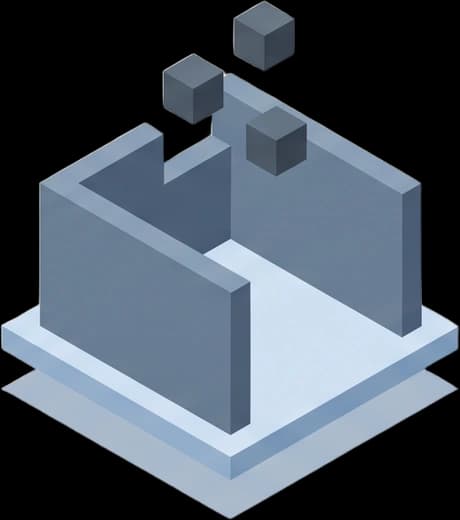
Gaussian splatting is the reconstruction method behind a tour you can walk. Rather than building a room out of flat triangles and pasting photographs onto them, it represents the space as a very large number of small soft coloured blobs — the splats — each holding a position, a size, a colour and how see-through it is. Drawn together from wherever the viewer is standing, they resolve into the room. It handles the things a hard-edged model handles badly: glass, chrome, foliage, and the soft way real light falls off.
It is worth naming because it is why the tour behaves the way it does. The splats are solved out of the frames of your video, so what you move through is the space that was in front of the camera rather than a model somebody built to look like it. Nothing in the reconstruction is invented, which is also why a room you never walked into is not in the tour.
So “a gaussian splat tour” and “a 3D tour you can walk” are the same object. One is what it is called; the other is what it does.
Be first to walk your spaces.
We're onboarding in small batches. Join the list and we'll show you how it works — you shoot the walk, we build the tour.